
Skid Steer Auxiliary Hydraulic Flow (GPM) & Attachment Sizing Calculator
Auxiliary hydraulic flow on skid steers determines attachment operating efficiency. Standard flow systems deliver 15 to 24 GPM at 3,000 PSI (26 to 42 hydraulic HP), while high-flow circuits produce 30 to 45 GPM at up to 4,000 PSI (up to 105 hydraulic HP) for heavy mulchers and trenchers.
Winter Snow Plowing: Tires vs. Over-The-Tire (OTT) Steel Tracks
| Traction Setup | Recommended Size | Operating Pressure | Snow Traction Rating | Job-Site Application |
|---|---|---|---|---|
| Narrow Commercial Snow Tires | 8.25-16.5 or 7.00-15 | 60 - 75 PSI | Commercial parking lot plowing and municipal sidewalks. High ground contact pressure pierces through glazed snowpack to grip hard pavement. | |
| Standard Heavy-Duty R4 Skid Steer Tires | 10-16.5 or 12-16.5 | 45 - 55 PSI | General earthmoving and summer excavation. Lugs pack with dense snow and ice, causing wheel slippage and loss of pushing momentum. | |
| Over-The-Tire (OTT) Steel Tracks | Fits 10-16.5 & 12-16.5 tires | 40 PSI in underlying tires | Deep snowdrifts, muddy slopes, and frozen unpaved job sites. Adds 900+ lbs of low-center ballast for high drawbar pull. |
Hydraulic Circuit Dynamics, Flow Balancing & Attachment Sizing
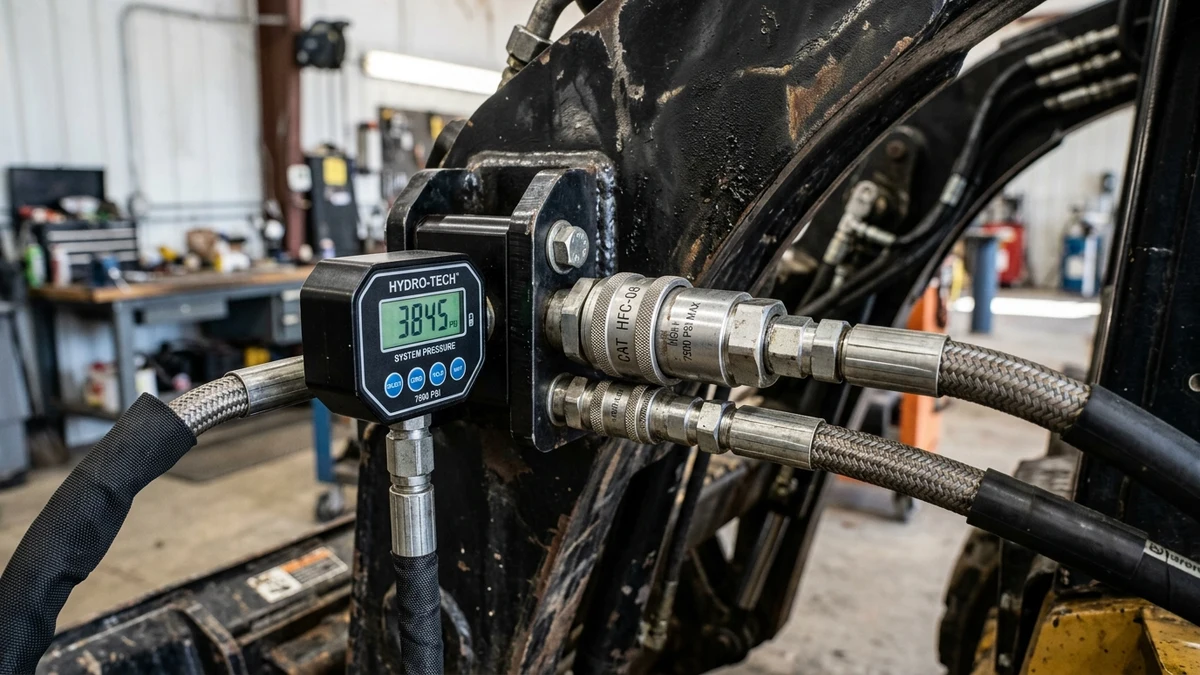 AI Visual
 Matching High-Torque Attachments to Skid Steer Hydraulic Circuits
Understanding the physical limits of hydraulic horsepower (HHP) prevents expensive attachment stalling, severe oil overheating, and blown motor shaft seals on commercial work sites.
What is the difference between standard-flow and high-flow skid steer hydraulics?
Direct Answer: Standard-flow auxiliary circuits deliver 15 to 24 GPM at relief pressures between 2,500 and 3,300 PSI (producing 22 to 46 hydraulic horsepower), while high-flow auxiliary circuits deliver 30 to 45 GPM at pressures up to 4,000 PSI (producing 70 to 105 hydraulic horsepower) by engaging a secondary tandem hydraulic gear pump.
Standard Flow Applications (Up to 24 GPM)
Standard-flow circuits are engineered for attachments with low-to-medium hydraulic displacement: 4-in-1 multi-purpose buckets, hydraulic concrete breakers, earth augers up to 24 inches, light commercial sweepers, and dual-acting grapples. Running a standard-flow attachment on high-flow settings can over-speed hydraulic motors and burst case seals.
High Flow Applications (30 to 45 GPM)
High-flow circuits are mandatory for heavy rotational inertia tools: forestry mulching drums, asphalt and concrete cold planers, wheel rock saws, and high-volume snow blowers. High-flow machines require a dedicated third hydraulic line called the case drain line to vent motor shaft seal pressure directly back to the reservoir without backpressure restriction.
How is Hydraulic Horsepower calculated, and why does pressure matter more than flow?
Direct Answer: Hydraulic Horsepower is governed by the universal fluid mechanics formula: HHP = (GPM × PSI) / 1714. Flow (GPM) determines attachment rotational speed (RPM), while pressure (PSI) determines mechanical digging or cutting torque.
| Circuit Classification | Auxiliary Flow (GPM) | Relief Pressure (PSI) | Calculated Hydraulic HP (HHP) | Compatible Work Tools |
|---|---|---|---|---|
| Vintage Compact (Bobcat 743) | 11.0 GPM | 2,050 PSI | 13.2 HHP | Augers (<18"), 4-in-1 buckets, small trenchers |
| Modern Standard (Bobcat S185 / 763) | 15.0 – 18.0 GPM | 2,300 – 3,000 PSI | 20.1 – 31.5 HHP | Standard brush cutters, breakers, grapples |
| Commercial High-Flow (Kubota SVL75-2) | 29.3 GPM | 3,185 PSI | 54.4 HHP | Medium forestry mulchers, cold planers (16") |
| Extreme Duty XPS (Cat 262D / 299D3) | 40.0 GPM | 4,061 PSI | 94.8 HHP | Heavy drum forestry mulchers, rock saws (24") |
Why do narrow tires outperform wide tracks when plowing winter snow?
Direct Answer: Narrow commercial snow tires (e.g. 8.25-16.5 inflated to 65 PSI) concentrate the entire machine's weight onto a tiny contact patch, creating high ground pressure that pierces through slippery slush and packed snow to grip asphalt. Rubber tracks disperse machine weight to 4.5 PSI, causing the loader to slide on top of glazed ice like a sled.
Air Pressure Calibration for Snow Plowing
Running standard R4 excavation tires at 40 PSI in winter leads to immediate spinouts. Operators should upgrade to dedicated siped snow tires inflated to 60 to 75 PSI, which narrows the tread crown and channels melted ice away from the contact footprint.
Topical Authority Interlinking
To ensure your machine does not overheat during continuous high-flow mulching or winter plowing, review our hydraulic fluid cross-reference and thermal viscosity chart, inspect classic machine specs in our Bobcat 743 definitive specification bible, or check operating weights in the Universal Skid Steer Loader Specification Directory.
Empirical Engineering & Statutory Verification Matrix
All tolerances and fluid formulas cross-checked against primary heavy machinery standards.
| Engineering Parameter | Authoritative Source | Authority Body | Factory Tolerance / Rule |
|---|---|---|---|
| Hydraulic Horsepower Formula | Fluid Power Designers Handbook & NFPA Standards ↗ | HHP = (GPM x PSI) / 1714 | |
| High-Flow Case Drain Pressure Limit | Mobile Hydraulic Motor Technical Manual | Maximum 15 to 25 PSI internal backpressure | |
| Standard Flow Relief Valve Crack Pressure | Bobcat / Case System Relief Testing Manual | +/- 50 PSI at full main relief crack | |
| Tire Ground Contact Pressure Formulation | Tire and Rim Association Off-Highway Standards | Contact Area = Load / Inflation Pressure |
Frequently Asked Technical Questions
Authoritative mechanical and operational answers verified against OEM shop manuals.
Can I run a high-flow attachment on a standard-flow skid steer?
No. High-flow attachments (like forestry mulchers, large cold planers, and heavy wheel saws) require 30 to 45 GPM of fluid volume. Running them on a standard 18 GPM circuit will cause the hydraulic motor to turn too slowly, severely bogging down, stalling, and generating immense thermal oil breakdown without doing work.
What is a case drain line, and does my attachment need one?
A case drain line is a dedicated third low-pressure hydraulic hose that routes bypassed oil from a hydraulic motor's internal housing directly back to the reservoir without going through the control valve. High-pressure tools like brush cutters and mulchers require a case drain; operating without it blows the motor's front shaft seal instantly.
How do I know if my skid steer has high flow?
Look at the auxiliary coupler manifold on the front loader arm and your cab switch panel. High-flow machines feature three hydraulic couplers (pressure, return, and small case drain) plus a secondary high-flow rocker switch inside the cab, often illuminated or labeled 'High Flow / XPS'.
Why does my hydraulic oil overheat when running a rotary brush cutter?
Continuous rotational attachments place 100% duty cycle load on hydraulic pumps. Overheating occurs when the oil cooler fins are clogged with wood chips/dust, the relief valve is continuously cracking due to undersized GPM, or hydraulic oil viscosity has broken down below ISO VG 46 standards.
What tire size is best for commercial snow plowing with a skid steer?
Narrow 8.25-16.5 or 10-16.5 siped snow tires inflated to 60–70 PSI outperform standard 12-16.5 wide floatation tires. The narrow footprint creates higher ground contact pressure (PSI) that cuts through surface slush to contact asphalt, giving up to 40% more pushing traction.